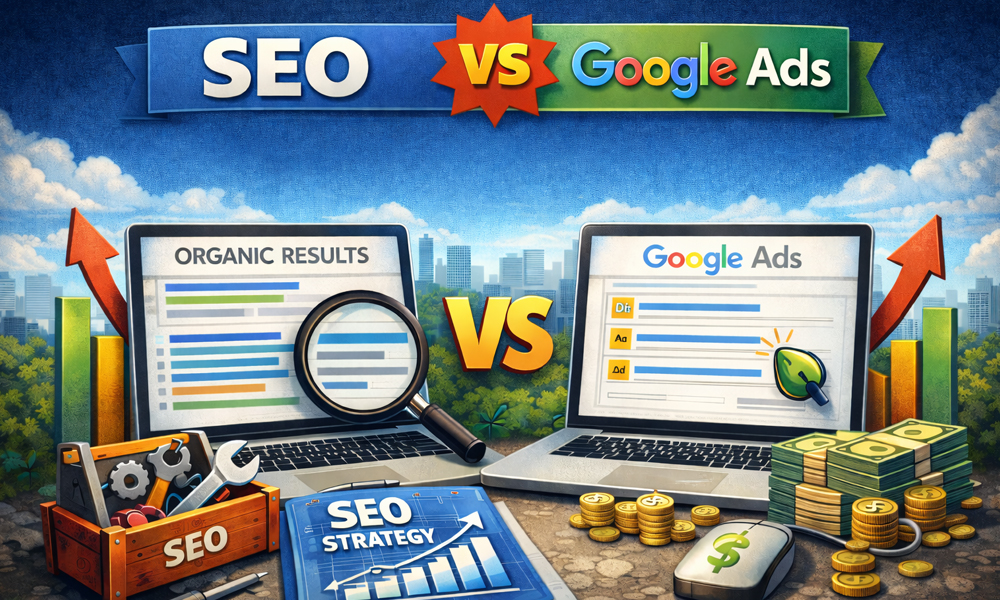
SEO vs Google Ads: Which Is Better for Your Business Growth?
Delivering the best web design agency
In the digital arena of 2026, the battle for the first page of Google has never been more intense. Business owners often find themselves at a crossroads, staring at two distinct paths: the organic, steady climb of Search Engine Optimization (SEO) or the high-speed, instant impact of Google Ads (SEM). Choosing the right one isn't just about spending money; it’s about understanding which engine will drive your specific business goals the fastest.
The truth is that neither is a "silver bullet" on its own. While SEO builds your digital kingdom over time, Google Ads acts as the megaphone that ensures you're heard immediately. To help you decide where to invest your hard-earned budget, let's break down how these two giants compare in the current market.
1. Speed to Results: The Sprint vs. The Marathon
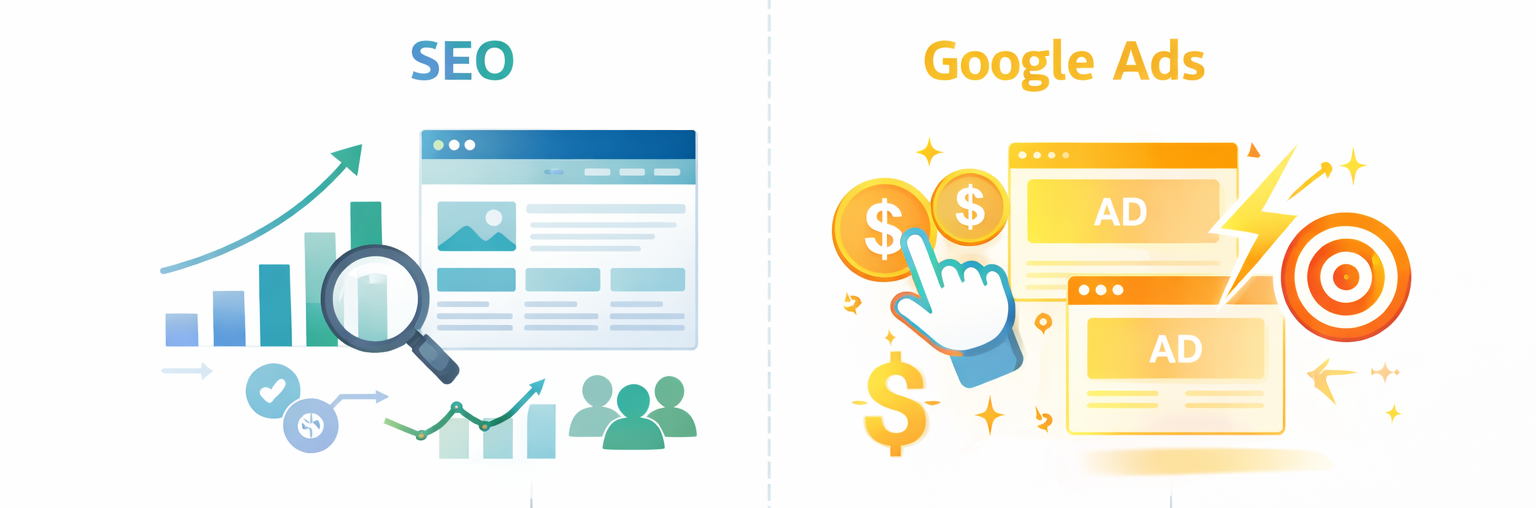
If your business needs leads by tomorrow morning, Google Ads is your undisputed champion. Paid search allows you to bypass the "waiting period" of the algorithm, placing your website at the very top of search results the moment your campaign goes live. It is the ultimate tool for seasonal promotions, new product launches, or businesses that need to generate immediate cash flow to scale operations.
On the other hand, SEO is a long-term play that requires patience and consistency. It often takes months to see significant movement in organic rankings as Google’s AI evaluates your site’s credibility and authority. However, while the start is slow, the momentum of SEO is powerful; once you reach the top, you don't have to pay for every click, creating a foundation of "evergreen" traffic that continues to flow even when you aren't actively spending on ads.
2. Cost Efficiency and ROI Sustainability
Google Ads operates on a "pay-to-play" model. The moment you stop funding your account, your visibility vanishes. In competitive industries, the Cost Per Click (CPC) can become quite high, meaning your profit margins might get squeezed if your conversion rate isn't optimized. However, for many, the ability to track every single rupee spent and see an immediate return makes it an incredibly transparent and predictable investment.
SEO, while requiring an upfront investment in content and technical fixes, offers a much higher Return on Investment (ROI) over time. Because you aren't paying Google for organic clicks, your "cost per lead" effectively drops the longer your content stays ranked. This builds long-term equity for your brand; you are essentially owning your digital real estate rather than just renting a spot at the top of the page.
3. The Power of a Hybrid Strategy
While many debate which is "better," the most successful brands in 2026 realize that SEO and Google Ads work best when they work together. Using a hybrid approach allows you to dominate the search results page twice appearing in both the sponsored section and the organic listings. This double visibility significantly increases your brand’s perceived authority and trust in the eyes of the consumer.
A balanced strategy allows you to use Google Ads to test which keywords actually result in sales, and then use those insights to fuel your long-term SEO content plan. By using paid ads for immediate "wins" while simultaneously building your organic foundation, you ensure that your business is protected against algorithm changes while maintaining a steady pulse of new customers.
4. Trust, Credibility, and User Behavior
Modern users are increasingly savvy; many tend to skip past the "Sponsored" labels and head straight for the organic results, viewing them as more "earned" and trustworthy. Ranking highly in organic search tells the user that Google’s sophisticated AI has vetted your site and deemed it the most helpful answer to their query. This organic trust is a major asset that can lead to higher long-term customer loyalty and brand recognition.
However, Google Ads has evolved to be more integrated into the user experience, often providing helpful "snippets" or local map results that are hard to ignore. For mobile users looking for immediate services like a plumber or a local clinic the top of page ads are often the most convenient choice. Ultimately, the "best" option depends on whether your audience is looking for a quick transaction or a trusted, authoritative resource for their problem.
Which Strategy Fits Your 2026 Goals?
Whether you choose the immediate boost of Google Ads or the sustainable growth of SEO, the most important step is to start building your digital presence today.
Leave a Comment