

Social Media vs. Search Engines: Where Should You Spend Your Ad Budget?
28
Aug
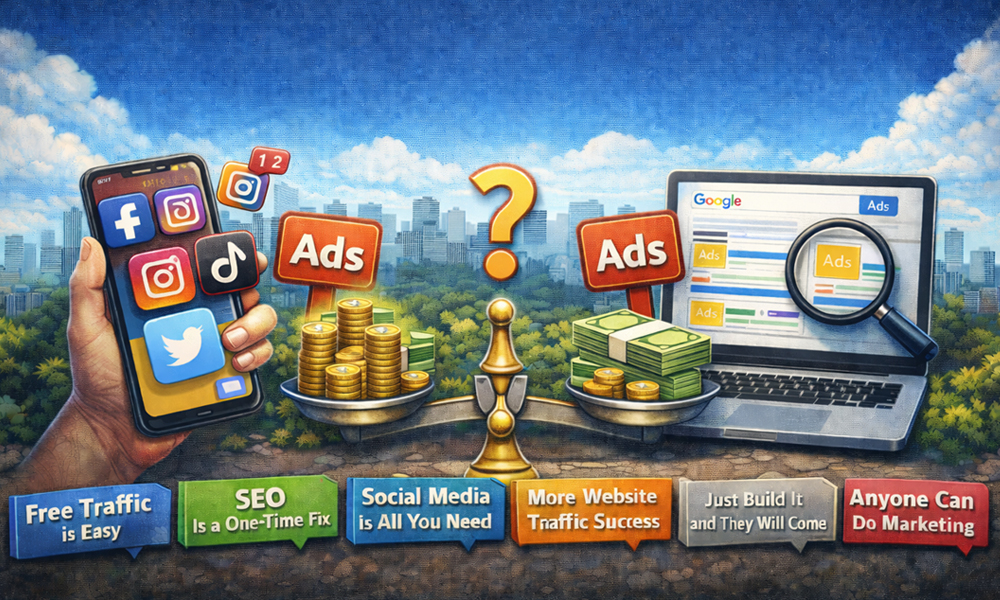
In the fast-paced digital economy of 2026, the question is no longer just where your customers are, but how they are looking for you. For years, the choice was simple: use search engines for sales and social media for "likes." However, the lines have blurred. Social platforms have become powerful discovery engines, and search engines have integrated highly visual, social style feeds.
Deciding where to allocate your next marketing budget depends on your specific business goals. Are you trying to capture someone who is ready to buy right now, or are you trying to introduce your brand to someone who doesn't even know they need you yet? Let's look at the strengths of each to see where your money will work the hardest.
1. Search Engines: Capturing High-Intent Buyers
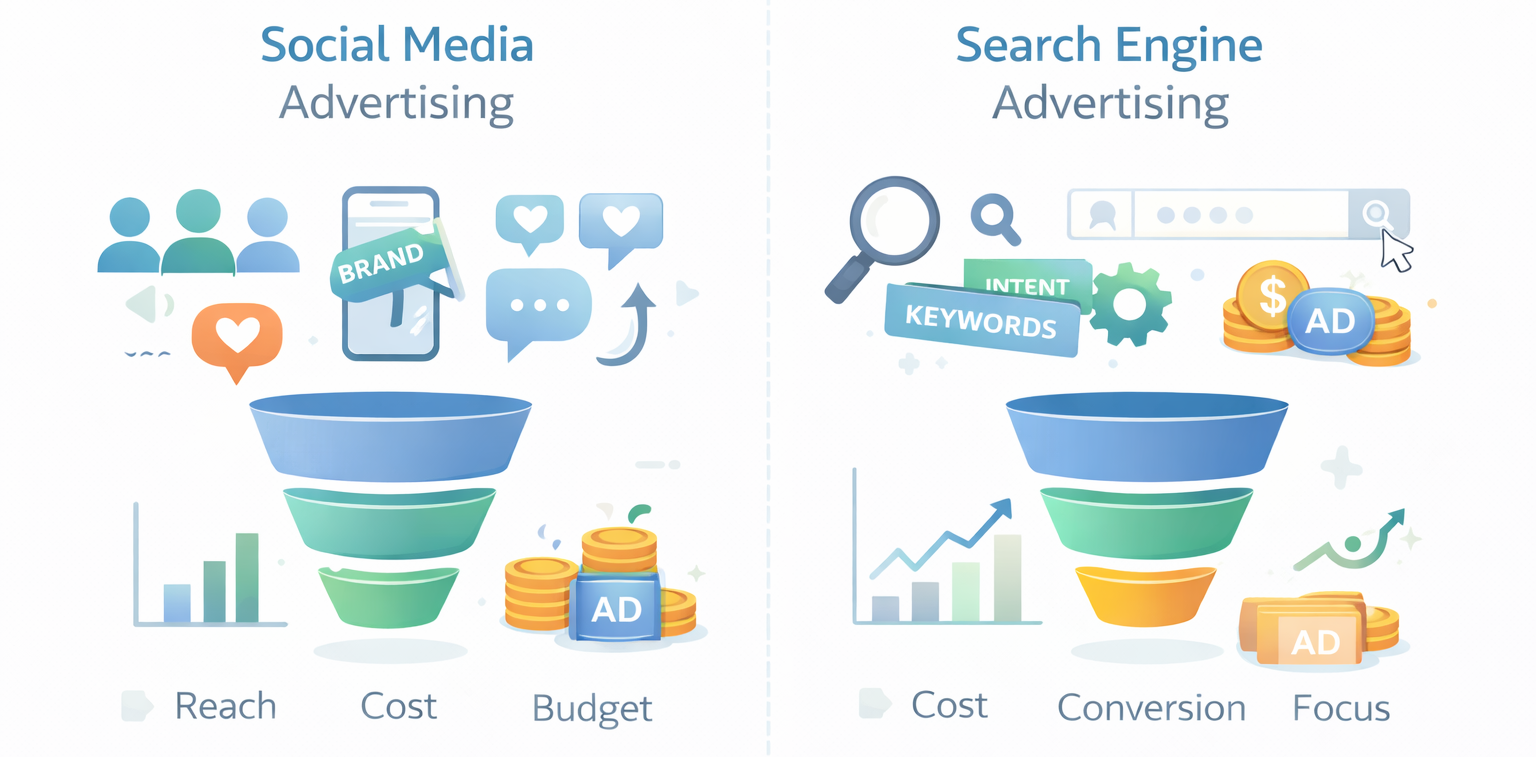
Search engine advertising, primarily through Google Ads, remains the gold standard for "intent-based" marketing. When someone types "emergency plumber" or "best CRM software" into a search bar, they are actively looking for a solution. In 2026, AI-driven search results mean your ads aren't just matching keywords; they are matching the user's specific problem. This makes search engines the most efficient place to spend your budget if your primary goal is immediate sales and high-quality leads.
The main advantage here is the "pull" factor. You aren't interrupting a user's day; you are providing the answer they requested. While the cost-per-click (CPC) in search can be higher than on social media especially in competitive niches the conversion rate is typically much higher. If your business relies on local services or urgent needs, search engine ads should likely command the majority of your initial budget.
2. Social Media: The New Engine of Discovery
Social media has undergone a massive transformation, with platforms like Instagram, TikTok, and YouTube becoming the "new search engines" for younger generations. Unlike traditional search, social media ads use a "push" strategy, appearing in a user’s feed based on their interests, behaviors, and even the "vibe" of content they enjoy. This is where you spend your budget when you want to build brand awareness, launch a new product, or create a visual connection with your audience.
Social media ads excel at "top-of-funnel" growth. They allow you to micro target demographics with incredible precision reaching, for example, "entrepreneurs in Bengaluru interested in sustainable fashion." While the purchase intent might be lower than a direct Google search, social media offers a much lower cost for reaching a massive audience. In 2026, a well-placed short-form video ad can spark a trend that drives more traffic than any keyword ever could.
3. The Shift: Social Search vs. AI-Powered Search
By 2026, the "Search vs. Social" debate has a new layer: Multi-modal Discovery. Over 70% of consumers now use social media for product research, looking for video reviews and creator opinions rather than just reading a website's text. Meanwhile, search engines have introduced AI Overviews that cite social media discussions as authoritative sources. This means that even if you spend on search ads, having a strong social presence helps validate your brand's credibility.
To stay ahead, your budget shouldn't be trapped in one silo. If you only run search ads, you miss out on the "discovery" phase where people find products they didn't know they wanted. If you only run social ads, you risk losing the customer at the final step when they go to Google to "price check." The smartest businesses are using an integrated approach, ensuring they are visible both when a user is scrolling for inspiration and when they are searching for a final decision.
4. Making the Choice: ROI and Scalability
Ultimately, your decision should be guided by your Customer Acquisition Cost (CAC). In 2026, data shows that local service businesses often see a higher return on ad spend (ROAS) with Google Ads, while lifestyle and e-commerce brands often see better long-term scalability through social media influencers and video ads. If your budget is tight, a common "winning" strategy this year is a 70/30 split: 70% toward the channel that drives your most direct sales and 30% toward the channel that builds your future audience.
Remember that social media ads are "creative-heavy" they require constant refreshes of videos and images to avoid ad fatigue. Search ads, conversely, are "data-heavy" they require constant keyword and bid optimization. If you have a team that is great at storytelling and video, social media will feel more natural. If you have a team that loves data and technical precision, search engines will likely be your strongest playground.
Leave a Comment